So Long, Farewell Unlimited Data
The Death of Unlimited Data
They say all good things must come to an end. I suppose that’s true. Verizon has announced that it will no longer support an unlimited data plan. Verizon’s move follow in footsteps of AT & T, which eliminated it unlimited internet data plan last summer.
Mobile device purchases have steadily escalated over the last several years and constantly connected consumers are straining network capacities embracing cloud computing other services. This is especially true as the lines between device blur – phones like the T-Mobile My Touch can become a portable hotspot and share precious bandwidth with the masses. (A feature we happen to love.)
A study conducted by Nielsen last year indicated that smart phone data consumption averaged 300MB a month. However, Nielson did not exclude smartphone owners that did not use data services. Therefore, the statics are skewed slightly lower than the actual consumption rate for customers that use bandwidth.
Will It Spread?
It will likely only be a matter of time before all wireless carriers adopt a similar stance. The smart phone bandwidth usage graph looks like a steep isosceles triangle climbing with no end in sight.
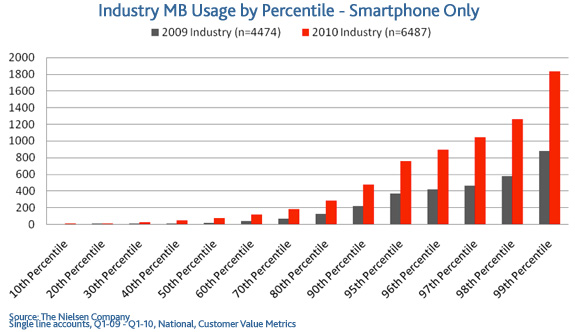
Nielson’s data shows data consumption increased from 90MB per month, during the first quarter of 2009, to 298MB per month the first 3-months of 2010 – a 230 percent. It is likely that cable companies and other telecommunications service providers that offer internet connectivity will use actions of wireless carriers as an example and endorsement. It would not be surprising if home providers introduce surcharges for “excessive” bandwidth consumption.
Users of all devices, mobile, desktop and others have demonstrated an all almost insatiable desire for bandwidth. How else will they watch essential content like a puppy wearing a moustache? At some point somebody somewhere is going to have to pay for the extra hardware and network services required to keep serving up these massive amounts of data.
Our lovely free ride on the bandwidth highway might be slowing to a halt.

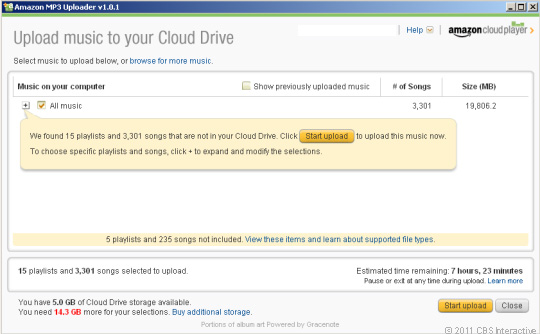
 Even those that have managed to miss the marketing coverage might have experienced the cloud. Do you manage your finances at Mint.com? Have you used Facebook or Flickr? You’ve been to the cloud.
 Instead of uploading and interacting with remote content, new cloud services like
 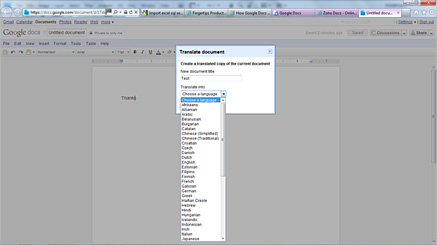 You can translate your documents to other languages in Google Docs by going to the “Tools” menu, select “Translate Document” and a list of available languages is displayed.
 There are countless tablets on the market, but Apple’s iPad is just sexy. Apple’s iPhone and iPad make it easier than ever to stay in touch and share media on the go. Despite their appeal, they do come with challenges; expanding storage on the devices has been a nightmare – until now. It’s time for a little device hard drive recovery.
 You can download media via your Mac or PC, and then stream it to your iPad or iPhone. It supports streaming to as many as three iPads or iPhones at once. If that wasn’t enough, the device creates its own Wi-Fi connection, so you can stream videos and upload data to your iPad or iPhone no matter where you go.
 Use tabs instead of windows, but don’t get crazy. Almost all major browser versions support tabs. Using tabs provides a quicker web experience than pages because tabs allow users to locate and switch between content easily, while windows can become hidden or obstructed. Multiple tabs in one window is just easier. In addition, tabs in most browsers use fewer computing resources than opening a completely new browser window.
 Get a decent browser. Despite rants by technologists and campaigns by Microsoft to
 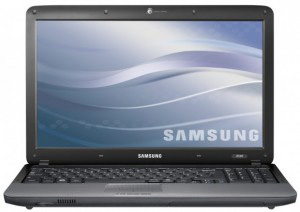 Recently, technical blogs and Twitter feeds were full of rants about laptop manufacturer Samsung after Network World published an